
DeWalt vs Milwaukee Tire Inflator: Which One Should You Buy?
DeWalt and Milwaukee both make strong battery-powered tire inflators, but the right choice depends mostly on your battery platform, tire size, power-source needs, and whether you want maximum flexibility or maximum cordless performance.
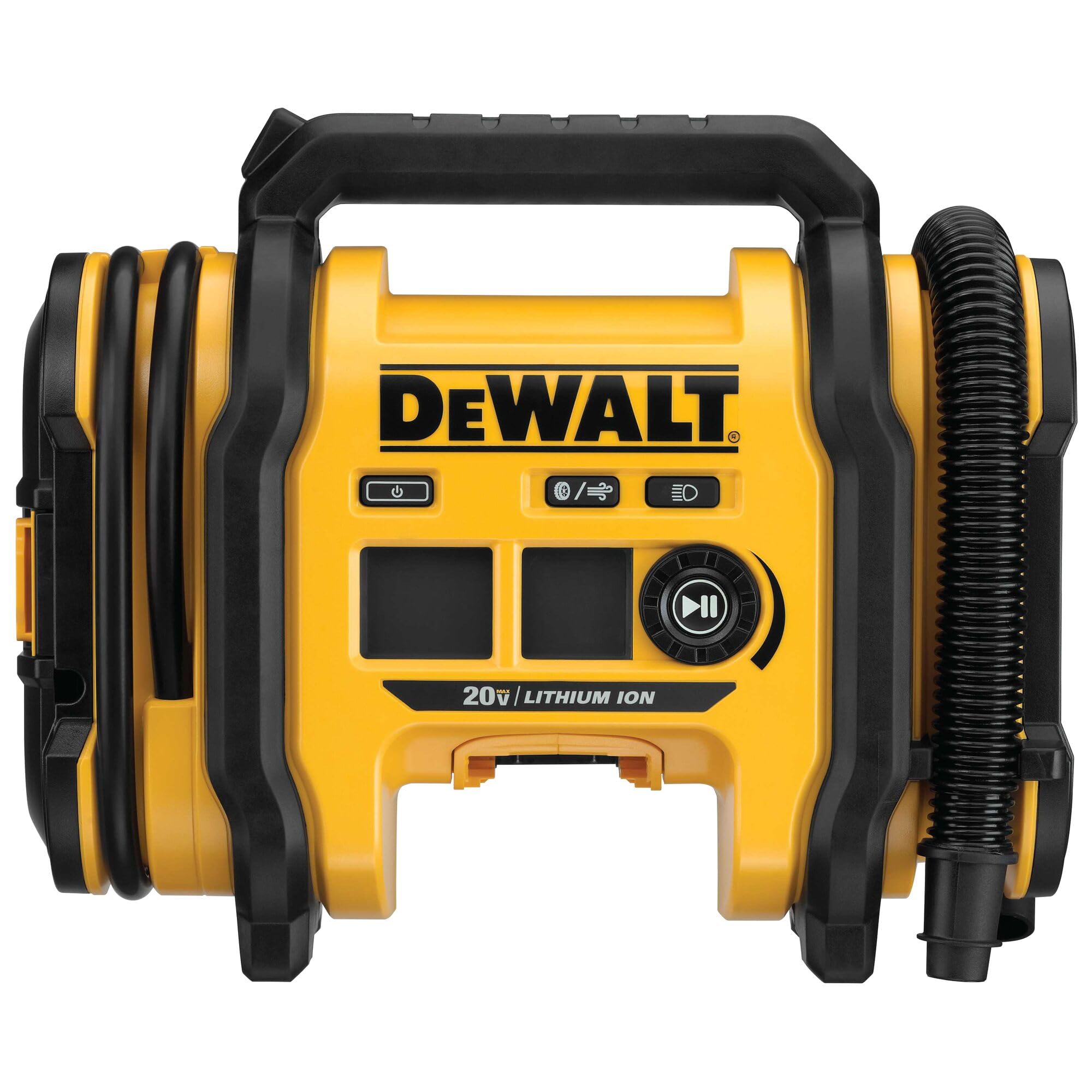
DeWalt DCC020IB 20V MAX Tire Inflator
Best if you already own DeWalt 20V MAX batteries or want 20V, 12V DC, and AC power flexibility.
Check DeWalt price →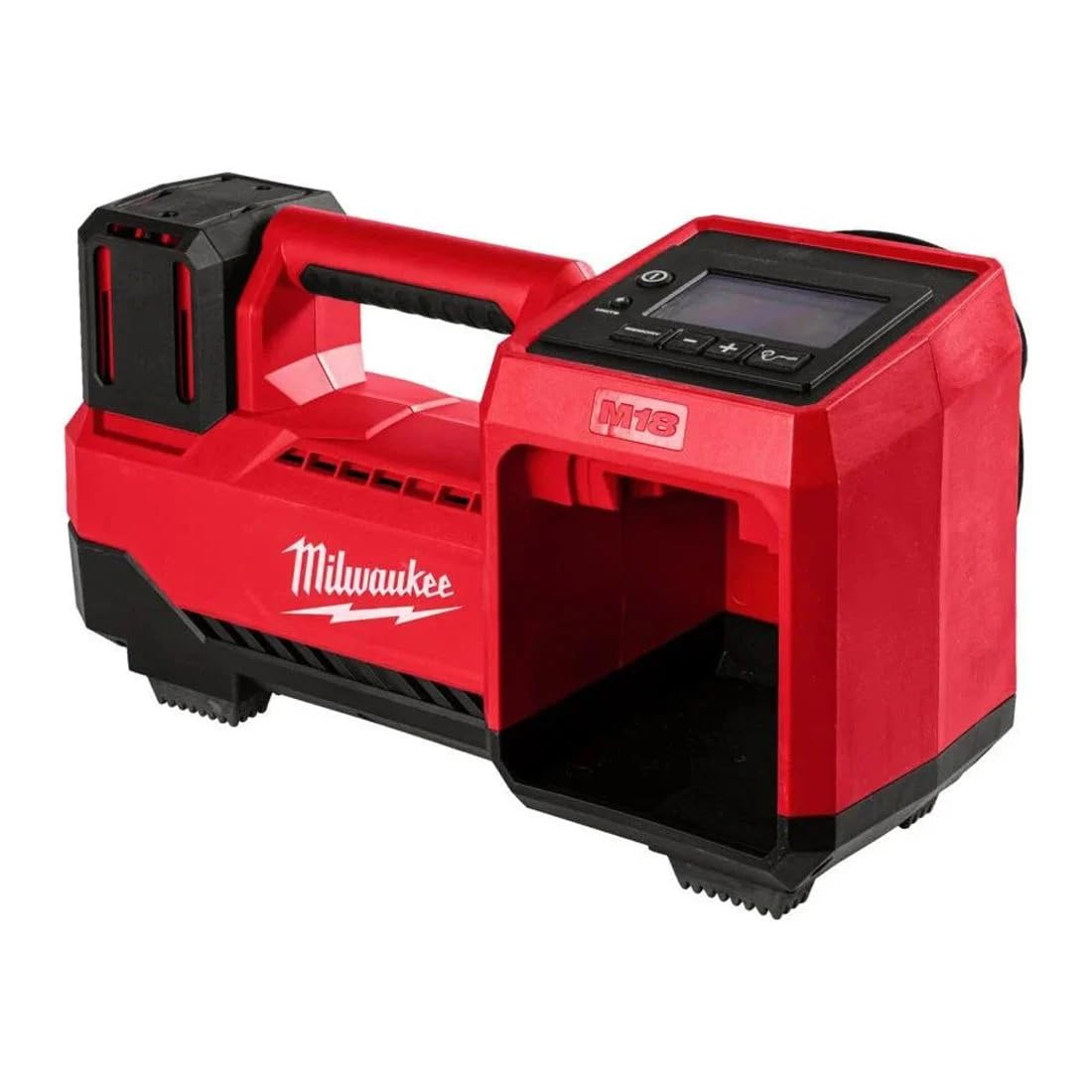
Milwaukee M18 Inflator 2848-20
Best if you already own M18 batteries and want a stronger cordless inflator for passenger and light-truck tires.
Check Milwaukee M18 →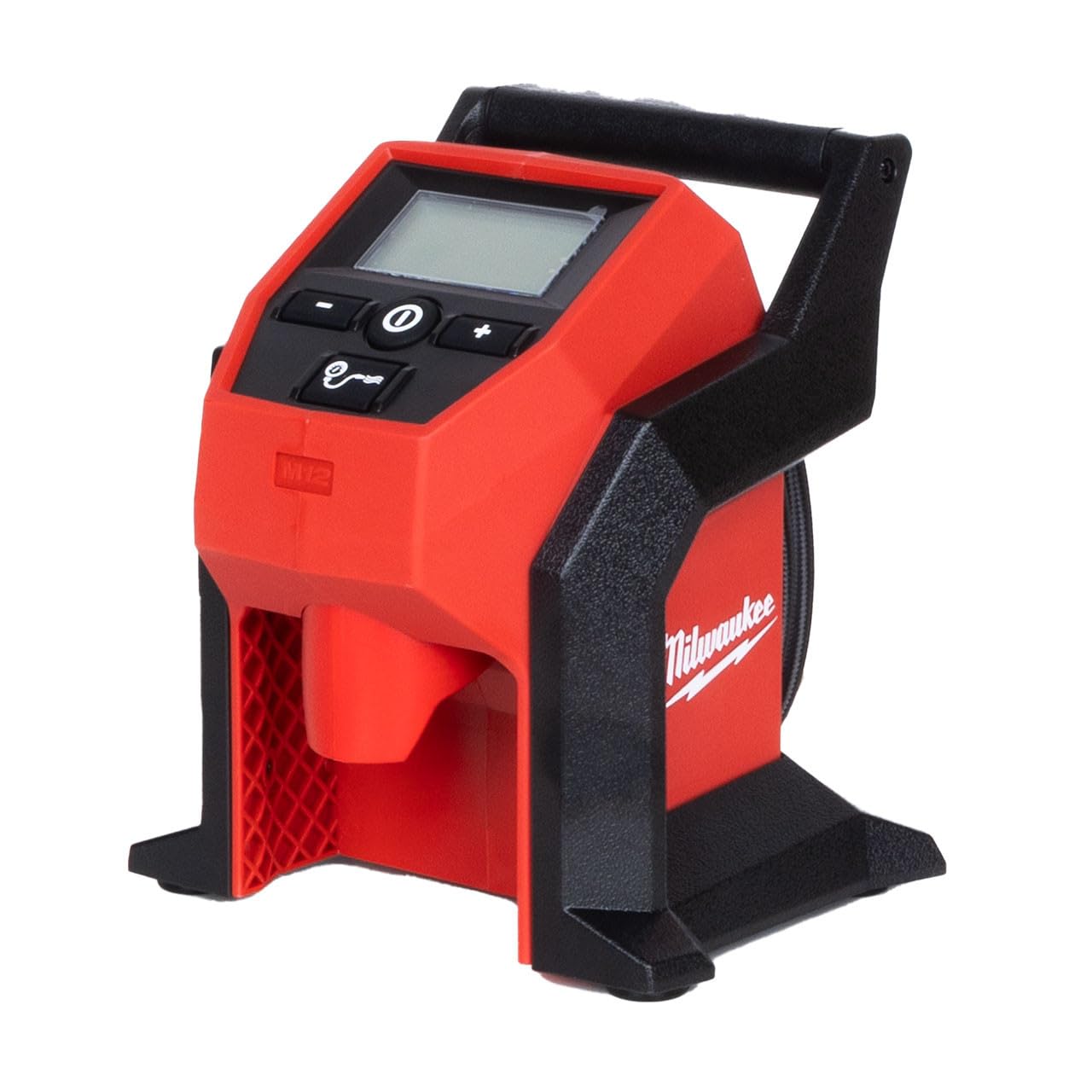
Milwaukee M12 Compact Inflator
Best if you prefer a smaller cordless inflator and already use the Milwaukee M12 battery system.
Check Milwaukee M12 →The fastest way to choose between a DeWalt tire inflator and a Milwaukee tire inflator is simple: buy into the battery platform you already own. But there is one important exception. The DeWalt DCC020IB has a flexibility advantage because it can run from 20V MAX battery, 12V DC, or 110V AC power, while Milwaukee’s M18 and M12 models are mainly battery-platform choices.
Quick answer: DeWalt or Milwaukee?
Choose DeWalt if you already own DeWalt 20V MAX batteries or want the flexibility of battery, 12V DC, and 110V AC power. Choose Milwaukee M18 if you already own M18 batteries and want a stronger cordless option for passenger and light-truck tires. Choose Milwaukee M12 if compact size matters more than maximum output.
Quick verdict by buyer type
| Buyer profile | Best choice | Why |
|---|---|---|
| Already owns DeWalt 20V MAX batteries | DeWalt DCC020IB | You can use your existing DeWalt battery and still have 12V DC backup. |
| Already owns Milwaukee M18 batteries | Milwaukee M18 Inflator | It fits your M18 ecosystem and is positioned for passenger and light-truck tire use. |
| Already owns Milwaukee M12 batteries | Milwaukee M12 Compact Inflator | More compact and convenient for smaller tire top-offs. |
| Wants 12V car outlet backup | DeWalt DCC020IB | The 12V DC option is useful if your tool battery is not charged. |
| Wants garage AC power | DeWalt DCC020IB | It supports 110V AC, but check whether the AC adapter is included. |
| Wants compact storage | Milwaukee M12 | Smaller tool body and better fit for compact kits. |
DeWalt vs Milwaukee tire inflator comparison table
| Feature | DeWalt DCC020IB | Milwaukee M18 2848-20 | Milwaukee M12 2475-20 |
|---|---|---|---|
| Best for | DeWalt users and flexible power | Milwaukee M18 users and stronger tire use | Compact Milwaukee setup |
| Battery platform | DeWalt 20V MAX | Milwaukee M18 | Milwaukee M12 |
| Power options | 20V MAX battery, 12V DC, 110V AC | M18 battery | M12 battery |
| Automatic shutoff | Yes | Yes / model feature | Yes / TrueFill-style auto shutoff |
| Digital gauge | Yes | Yes | Yes |
| Included power accessories | Usually tool-only; battery, charger, and AC adapter may be separate | Usually tool-only depending on listing | Usually tool-only depending on listing |
| Best tire use | Car tires, bikes, inflatables, emergency top-offs | Passenger and light-truck tires | Car tire top-offs and compact use |
| Main advantage | Most flexible power options | Stronger cordless platform choice | Compact size |
| Main weakness | Accessories may cost extra | Less useful if you do not own M18 batteries | Less powerful than M18 for larger tires |
| Amazon link | Check DeWalt → | Check M18 → | Check M12 → |
The three main options explained
DeWalt DCC020IB
The DeWalt DCC020IB is the most versatile option in this comparison because it is not limited to battery power. It is a good fit for DeWalt owners who want a garage tool, jobsite inflator, and vehicle emergency inflator in one unit.
Check DeWalt price →Milwaukee M18 Inflator
The Milwaukee M18 is the stronger Milwaukee option for users already invested in the M18 battery platform. It makes the most sense if you want a cordless inflator and already own compatible M18 batteries.
Check M18 price →Milwaukee M12 Compact Inflator
The Milwaukee M12 Compact Inflator is not the direct heavy-duty rival to the DeWalt DCC020IB or Milwaukee M18, but it is useful for buyers who already own M12 batteries and want a smaller tool for basic tire inflation tasks.
Check M12 price →Battery platform is the biggest buying factor
If you already own DeWalt or Milwaukee batteries, your decision is mostly made. A tool-only inflator becomes much more attractive when you already have compatible batteries and chargers at home.
Choose DeWalt if you own 20V MAX
The DCC020IB becomes a better value when you already have DeWalt batteries. You also get the backup benefit of 12V DC and AC compatibility.
Choose Milwaukee M18 if you own M18
The M18 inflator is the better choice for buyers already using Milwaukee M18 tools and batteries.
Choose M12 for compact use
The M12 Compact Inflator is better when portability and smaller storage matter more than maximum output.
Power source: where DeWalt has the advantage
The DeWalt DCC020IB has the clearest power-source advantage. It can run from three different power options: DeWalt 20V MAX battery, 12V DC vehicle power, or 110V AC power. This makes it easier to use in different situations.
| Situation | Best option | Reason |
|---|---|---|
| Roadside tire emergency | DeWalt DCC020IB | The 12V DC cord is useful if the tool battery is not charged. |
| Garage tire top-off | DeWalt DCC020IB | AC power can be useful, but check whether the adapter is included. |
| Jobsite cordless use | DeWalt or Milwaukee | Choose based on the battery system already in your tools. |
| Repeated cordless inflation | Milwaukee M18 | Better fit if you already use M18 and want a stronger cordless tire inflator. |
Tire size and use cases
For normal car tire top-offs, all three can be useful. For larger tires, repeated inflation, or light-truck use, the Milwaukee M18 becomes more attractive. For emergency flexibility, DeWalt still has the advantage because of its 12V DC backup.
| Use case | DeWalt DCC020IB | Milwaukee M18 | Milwaukee M12 |
|---|---|---|---|
| Car tire top-offs | Good | Good | Good |
| Emergency car kit | Best because of 12V DC | Good if battery is charged | Good if battery is charged |
| Light truck tires | Possible for top-offs | Better fit | Less ideal |
| Bike tires and balls | Good | Good | Good |
| Air mattresses and inflatables | Good due to high-volume mode | Not the main strength | Not the main strength |
| Large RV/off-road tires | Not ideal | Better, but still check heavy-duty needs | Not ideal |
For bigger tires, see our best tire inflator for trucks guide.
Price and value: check the bundle before buying
Price comparisons can be misleading because many DeWalt and Milwaukee inflators are sold as tool-only products. A tool-only deal is only a real deal if you already own compatible batteries and chargers.
| Question | Why it matters |
|---|---|
| Is it tool-only? | You may need to buy battery and charger separately. |
| Do you already own compatible batteries? | This can make DeWalt or Milwaukee much better value. |
| Does the DeWalt listing include the AC adapter? | The DCC020IB supports AC power, but the adapter may not be included. |
| Do you need compact storage or stronger performance? | Compact users may prefer M12; stronger cordless users may prefer M18. |
Related Revviso guides
Use these guides if you are still comparing inflator types, power sources, or brands:
Final verdict: DeWalt or Milwaukee?
Buy DeWalt if…
- You already own DeWalt 20V MAX batteries.
- You want 12V DC backup for roadside emergencies.
- You want possible 110V AC garage use.
- You inflate car tires, bike tires, balls, and inflatables.
- You value power flexibility more than pure cordless strength.
Buy Milwaukee if…
- You already own Milwaukee M18 or M12 batteries.
- You want a dedicated cordless inflator.
- You prefer the M18 platform for stronger tire use.
- You prefer the M12 platform for compact storage.
- You do not need 12V DC or AC power backup.
Choose the battery platform you already own.
DeWalt wins for power flexibility. Milwaukee wins if you already use M18 or M12 and want a dedicated cordless setup.